
March 5, 2026
The Sky’s the Limit for This Birder
Fewer than 500 people worldwide have reported seeing this African bird – a blue-moustached bee-eater. Photo by Marc Chelemer By…

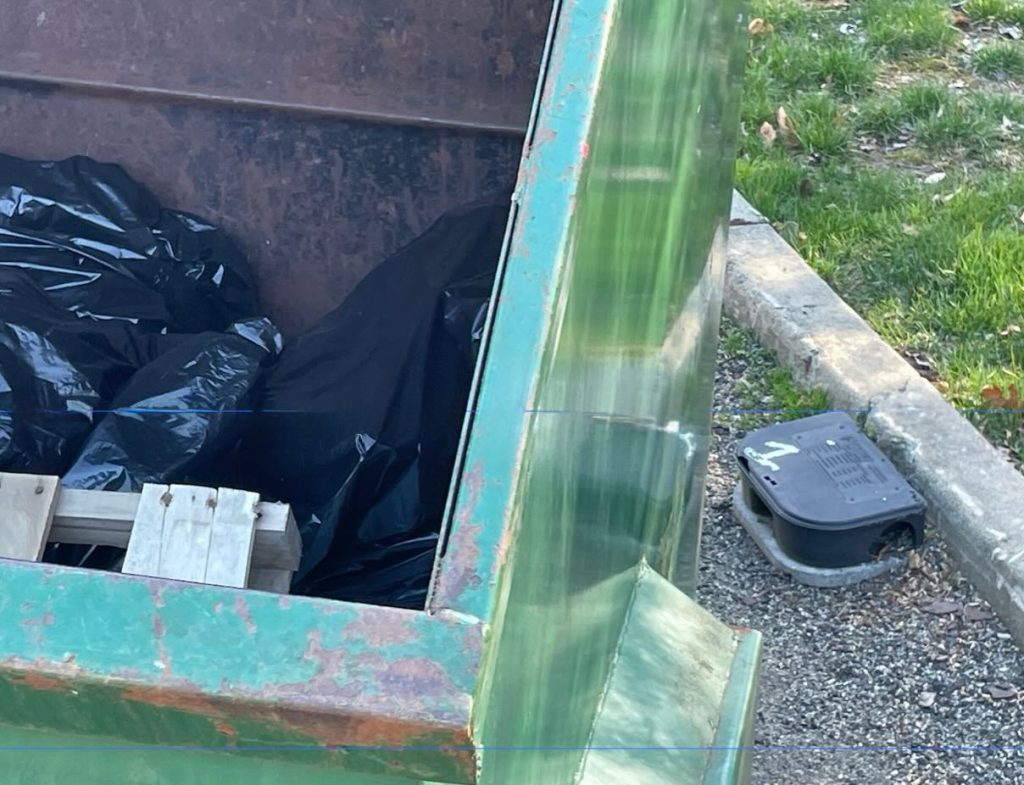
Ask any rat-control expert on how to curb rat populations, and they will tell you the two most important steps are cutting off the rats’ food sources and preventing them from getting inside buildings. If you do not take these two steps, you will never win the battle against rats.
Rat-poison dispensers — those black and gray plastic boxes you see everywhere –were intended as the last resort when curbing rats. Instead, they have become the go-to solution, often ignoring the underlying causes.
Notably, many restaurants and other businesses that use these rat-poison dispensers often leave their Dumpsters open or put their garbage in plastic bags. These free buffets attract more and more rats, creating an endless cycle of rat infestations — and poisoned wildlife.
I was in an office building’s parking lot when an exterminator company employee was putting new rat poison in the black box — next to a wide-open Dumpster. When I pointed it out to the him, he just shrugged.
Here’s how the rat-poison dispensers work:
A rat enters the black box, eats the bait, and leaves. The rat poison slowly takes effect, preventing the rat’s blood from clotting, and the rat slowly bleeds to death. In its weakened state, the rat is an easy meal for raptors, bobcats, red foxes, other wildlife and pets. And they also eat the poison inside the rat.
Sometimes the poison kills the raptor or mammal outright. sub-lethal levels accumulate in its system, like DDT used to. The weakened wildlife or pet is more likely to die from other causes.
A study by Cornell University found that two-thirds of the red-tailed hawks tested in New York State have anticoagulant rat poisons in their systems.
A 2021 University of Georgia study tested 116 bald eagles and 17 golden eagles for the presence of these rat poisons. Researchers found rat poison in 82% of the eagles.
An earlier study in NJ found residues of the worst types of rat poisons in 81% of the red-tailed hawks and 82% of the great horned owls tested.
New Jerseyans have worked together to do great things for wildlife, protecting and preserving habitat, banning DDT, cleaning up the water environment, and helping to bring back such iconic raptors as the peregrine falcon, the bald eagle, and the osprey. Now we must do a better job of protecting our wildlife — and pets — from the scourge of rat poison.
A loose-knit coalition hopes to get New Jersey to ban the worst of these poisons. Stay tuned.
For more information, check this excellent webpage: https://raptorsarethesolution.org/preferred-pest-control-products/
March 5, 2026
March 3, 2026
February 27, 2026
February 20, 2026