
March 5, 2026
The Sky’s the Limit for This Birder
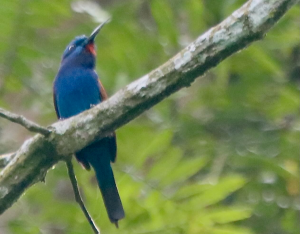
Fewer than 500 people worldwide have reported seeing this African bird – a blue-moustached bee-eater. Photo by Marc Chelemer By…

DeKorte Park in Lyndhurst had to put up warning signs after Dennis the Menace strafed unsuspecting passersby.
My new column for The Record and USA Today newspapers in New Jersey is all about Red-winged Blackbirds — and why they may make you take cover later this spring. (Photo above by Dennis Cheeseman, Thanks, Dennis!)
Here's the column:
By Jim Wright
Special to The Record
Spring doesn’t officially arrive until March 21, but I can assure you it’s here.
I’m getting reports of American woodcock sightings, skunk cabbage is popping through the muck at the local nature preserve, and – most significant – I’ve seen male red-winged Blackbirds.
Even if they weren’t a sign of spring, you’d have to love these marsh-loving birds. First, with those bright-red shoulder epaulets, males are easy to identify. They live up to their name.
Before long, they will stake out their turf and sing that distinctive “Cong-a-reeee” call to attract females. Each male will claim his watery territory and attract a small harem of females to create little red-winged blackbirds.
(Female red-winged blackbirds, in contrast, are a deceptive bunch. No red epaulets, and they’re not even a glossy black. They’re a drab, streaky brown, like an overgrown sparrow – the better to hide from predators and protective offspring.)
Perhaps most of all, I love how the males defend their nests in late spring and summer. The moment I saw a red-winged blackbird, which weighs a few ounces, drive off a huge great egret decades ago, I figured this was not a bird to be trifled with.
I knew for sure when I worked in DeKorte Park in the Meadowlands. On my lunch hour, I’d walk the boardwalk into the main tidal impoundment. One day, I discovered the hard way that a red-wing’s nest lurked in the nearby phragmites reeds.
An aggressive male flew at me from behind, making a startlingly loud snapping noise with his wings. The bird eventually became known as Dennis the Menace, named after photographer Dennis Cheeseman, who got the first good picture (mug shot?) of the culprit.
Last summer, after folks were strafed by a red-wing in my local nature preserve, we closed the trail for a few days until the red-wings had finished nesting. A couple of weeks later at the town's swimming lake, both a male and a female red-winged blackbird let me know when I got too close to a nest.
I dubbed the male “the lifeguard” because he would sit on an unoccupied lifeguard stand and yell at me when I walked past. I figured he had more than one nest to watch over because on another occasion a female perched in the nearby phragmites and make click-click noises. Since neither bird was aggressive, most folks walked by without a second glance.
Here’s how to tell if you’re too close to a red-wing nest. The first sign is the male will fly to a nearby branch and do a two-second-long whistle. If you don’t leave, he will fly over your head and whistle repeatedly – or do that dive-bomb sneak attack.
And here are a few preventive measures. Wear a hat. Make eye contact to avoid a sneak attack. And steer clear of the nest next time.
You can’t say you weren’t warned.
The Bird Watcher column appears every other Thursday. Email Jim at celeryfarm@gmail.com.

I found another sign that spring is near. The male cardinals are back to singing “birdie, birdie, birdie . . .” to attract the females. During the winter, I just hear chirps from both the male & female cardinals, but it sounds like mating season has started so spring must be near.
March 5, 2026

March 3, 2026
February 27, 2026
February 20, 2026
1 comment
Nancy Passow
I found another sign that spring is near. The male cardinals are back to singing “birdie, birdie, birdie . . .” to attract the females. During the winter, I just hear chirps from both the male & female cardinals, but it sounds like mating season has started so spring must be near.