
September 17, 2026
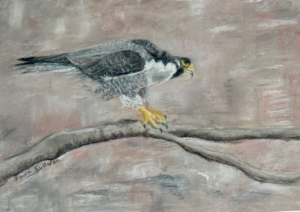
A New Painting of ‘The Beast’
A painting entitled "The Beast of State Line Lookout" now adorns the cafe there. The pastel by Laura Sullivan was…

My latest column for The Record is about one of my favorite birds of summer, the Green Heron. Featuring a photo by Alan Pomerantz taken during an Hour on the Tower at the Celery Farm. (Thanks, Alan!)
You can read it here:
By Jim Wright
Special to The Record
For me, no bird says summer quite like the green heron.
You can see this stunning medium-size bird when it perches at the edge of a nearby lake or marsh on a lazy August morning – before it pounces with its rapier bill to snag a dragonfly out of the air or a minnow from the water.
In the grand tradition of baffling bird names (beginning with the red-bellied woodpecker), "green" is far from the green heron's distinguishing color. Witmer Stone noted in "Bird Studies at Old Cape May" that "so completely lacking is the green in the full-plumaged bird that it is really not a 'green' heron' at all."
Perhaps that's why so many of the time-honored nicknames for the bird have nothing to do with its plumage but what happens when it's startled. These include fly-up-the-creek and chalk-line.
I compare looking at an adult green heron at close range to studying a masterpiece painting. Beauty lies in the overall view, but it also abounds in the details, from the heron's two-toned stiletto of a bill to its pale yellow legs.
A green heron I observed recently had deep purplish-blue feathers atop his head and grayish-blue feathers on its shoulders and wings. His chest was chestnut-colored, with a thin vertical white stripe leading to a white lower belly – so many colors for a bird with a monochrome name.
His eyes were yellow and intense – alert to any motion that might signal danger. He may have been on the hunt for dragonflies, but he was aware that he might somehow be prey as well. (I say "he" because female green herons are said to be a bit lighter and smaller.)
Male or female, green herons are resourceful. They are one of the few birds that know how to use tools. They sometimes attract fish by dropping a twig, insect, or bread into the water as bait.
As beautiful as these herons are, their voices are nothing to email home about. Although I've read that they have a deep, explosive call, I've only heard their various clucks and squeaks.
They build their primitive stick nests along swamps, marshes, lakes, ponds, impoundments, and other wet habitats with trees and shrubs to provide secluded nest sites.
By now, their young have fledged, and these herons will start flying south for the Caribbean and Central America in the next few weeks. Most of them will have exited the Garden State by mid-October.
I love what Witmer Stone also wrote about this half-pound marvel:
"His presence adds an indescribable something to the environment of salt marsh or woodland pool that we should not care to lose, while his coarse and explosive cry lends a touch of wildness to otherwise prosaic surroundings."
Enjoy him (and her) while you can.
The Bird Watcher column appears every other Thursday. Email Jim at celeryfarm@gmail.com.

For the first time we have Green Heron’s living in our woods this summer. Mama, daddy and 3 babies. We live in Harrison Michigan. It has been so wonderful to watch them grow.
September 17, 2026
September 5, 2026
August 28, 2026

August 11, 2026
1 comment
Leslie & Greg Kuczewski
For the first time we have Green Heron’s living in our woods this summer. Mama, daddy and 3 babies. We live in Harrison Michigan. It has been so wonderful to watch them grow.