
September 17, 2026
A New Painting of ‘The Beast’
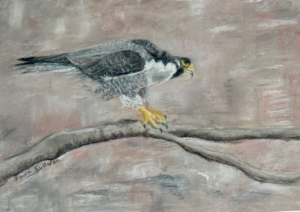
A painting entitled "The Beast of State Line Lookout" now adorns the cafe there. The pastel by Laura Sullivan was…

My latest column in The Record today features a backyard mystery involving a great crested flycatcher nest. You can read it below, and watch a YouTube video of Mama Flycatcher building the nest.
Here's a Mid-summer Mystery for You to Solve
By Jim Wright
Special to The Record | USA TODAY NETWORK – NEW JERSEY
Are you ready for an avian whodunit that involves a shocking turn of events? So far I have two likely suspects. But first, as much as it pains me, let me describe the crime.
Back in May, I wrote a Bird Watcher column about my screech owl box, and how a female wood duck had made herself at home and laid 10 eggs. Because I have a livestreaming cam in the box, I could watch the mom incubate the eggs for nearly a month. Nine ducklings hatched. The next morning, they jumped from the box with gusto.
Some friends and I cleaned out the box and hoped for tenants the following spring. A few days later, I noticed some pine straw in the box, then some odd feathers. What was going on?
I kept tabs on the nestbox action via the cam and found out soon enough: a great crested flycatcher had made a nest and had begun laying eggs that resembled speckled jelly beans.
I have to admit that this species of flycatcher was barely on my radar. I know that great crested flycatchers resemble phoebes’ skinnier cousins, with a black bill and a pale yellow belly, and that they have a wonderful call that Cornell’s All about Birds website aptly describes as a “penetrating whee–eep whistle that rises quickly and ends abruptly.”
Like most flycatchers, the great crested ones seldom visit feeders, preferring to perch in the woods and eat insects. And now I could watch this female raise a family.
To complicate matters, a wood duck laid her own eggs in the box while all this was going on.
The poor flycatcher seemed overwhelmed, incubating her eggs amid huge duck eggs.
Somehow she managed, and after two weeks, the babies hatched. I did a little research and was delighted to learn that the flycatcher chicks would stay for two weeks before they fledged — while the ducklings had jumped out of the box soon after they hatched. That meant I’d have ample time to watch the flycatcher nestlings.
Every day, I’d activate the cam to see how the little big mouths were doing. What fun.
Then I activated the cam one day and — what a jolt — all the baby birds had vanished. I had forgotten my own axiom: Never count your nestlings before they fledge.
So much of what we see in nature is wonderful that we forget that it’s still a jungle out there.
That raises this column’s mid-summer mystery. What killed the baby flycatchers?
The nest box is mounted on a pole 14 feet off the ground, with no trees nearby, and it has a baffle to thwart raccoons and snakes.
I figure some sort of winged predator must have flown in and absconded with the young before devouring them. The question is, which winged predator?
Let me know what you think.
The Bird Watcher column appears every other Thursday. Email Jim at celeryfarm@gmail.com.
September 17, 2026
September 5, 2026

August 28, 2026

August 11, 2026