
September 17, 2026
A New Painting of ‘The Beast’
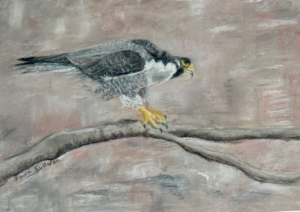
A painting entitled "The Beast of State Line Lookout" now adorns the cafe there. The pastel by Laura Sullivan was…

Carolina wrens sound different from region to region, posing a challenge for the Merlin app.
Photo credit: Alan Pomerantz
My latest column for The Record is an interview with Cornell Lab of Ornthology's Alli Smith, project manager for the amazing Merlin app.
By Jim Wright
Special to The Record | USA TODAY NETWORK – NEW JERSEY
Want to become a better birder? I can’t think of a better app than Merlin. This free app from the Cornell Lab of Ornithology has gotten millions of people looking up worldwide.
I recently touched base with Alli Smith, project manager for Merlin, to learn more about what’s been happening with the app since I wrote about it two summers ago. (The interview has been edited for space.)
What has been Merlin’s biggest advance?
Probably updates to Sound ID and Photo ID. We just updated Sound ID in July and added 355 species, so Merlin now can identify 1,724 birds by sound. This covers the United States, Canada and most of Europe, as well as widespread common birds of the neotropics, India and Taiwan.
Biggest surprise?
Our biggest source of joy here is seeing how many people are connecting with birds for the first time because of Merlin. Just this year so far (January-July), over 13 million people around the world have used Merlin.
That’s not just people who were already birders – it’s their friends and family and everyone else.
We keep a close eye on social media and we’ve even seen some celebrities sharing Merlin in the last few months: Sam Darnold from the Minnesota Vikings, actress Sarah Jessica Parker, and the lead singer of Blink 182, Mark Hoppus.
It’s exciting to see how far Merlin is reaching, and how it’s becoming “cool” to like birds.
Biggest challenge?
To train Merlin to recognize a new bird by sound, we train it using a minimum of 150 sound recordings of that species. That’s because we need to show Merlin examples of all the different vocalizations the bird can make (song, call, alarm, etc), and examples of the species from across its range.
For example, Carolina wrens sound pretty different here in New York State than they do in Georgia, so if we only taught Merlin using sounds from New York, it might not recognize wrens from Georgia.
What’s your advice to new birders?
Birds can be anywhere – that’s my favorite part about birding. You don’t need to go anywhere special – your neighborhood is packed with birds no matter where you are. Getting to know your local birds first can make it easier to learn others later on.
And some more practical advice: Birds are much more active early in the morning, especially in summer when it’s hot during the day. You can find birds any time, but you’ll see (and hear) more earlier.
What’s next?
Our biggest focus is expanding Sound ID to more parts of the world. We’re also working on incorporating videos of birds into the app. Seeing a bird moving can help you understand their behaviors and ID so much better.
My next column will be a followup to my last one, in which I asked readers to solve a midsummer avian “murder” mystery.
The Bird Watcher column appears every other Thursday. Email Jim at celeryfarm@gmail.com.
September 17, 2026
September 5, 2026

August 28, 2026

August 11, 2026