
September 5, 2026
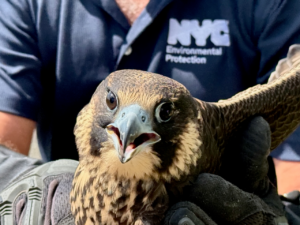
A Young Peregrine on the Ascent
Yesterday in the Mohonk Preserve near New Paltz, N.Y., Chris Nadareski of the NYC DEP released four young rehabbed peregrines,…

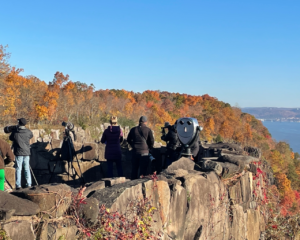
As I was posting the answer to Monday's mystery, Julie McCall was sending me a photo of a Muskrat she had just seen near the Warden's Watch (above).
I rushed out to see for myself, too late.
Julie also wondered if Celery Farm Muskrats are using dens instead of huts…
(Thanks, Julie!)

So interesting!

Here’s the info that led me to wonder if we may have some muskrats who’ve moved to dens:
From the Maine Department of Inland Fisheries and Wildlife (https://www.maine.gov/ifw/fish-wildlife/wildlife/wildlife-human-issues/living-with-wildlife/muskrats.html ):
“Den Sites
* Depending on site conditions, muskrat dens are located in banks or lodges.
* In dams, dikes and banks, muskrats tunnel upward from below the water surface into the soil to make dens that remain dry.
* Bank dens range from a short tunnel leading to an enlarged nest chamber, to a long and complex system of chambers, air ducts and entrances.
* In marshes and other areas lacking steep banks, muskrats build dome-shaped lodges from leaves, stems, roots and mud.
* Lodges are constructed in open water that is two to four feet deep, and are built high enough to keep the den above high-water levels.
* In marshes and other areas lacking steep banks, muskrats build dome-shaped lodges from leaves, stems, roots and mud.”
Two places I plan to check for lodges at the Celery Farm the next time I remember to:
1. Blue Heron Pond – the buildup of Phragmites has shrunk the open water and probably lowered the water level there, but also provides a bit of cover and prevents easy, obvious viewing from the trail. Could there be lodges back there?
2. The area of the lake that’s visible from the Scout Platform – the layout of the lake means some harder-to-view areas that aren’t visible at all from the Pirie-Maywood tower or from Warden’s Watch.
Swimming is not permitted at the CF and I can’t swim anyway, so I won’t be looking for den entrances beneath the water’s surface and in the banks. 😉
September 5, 2026
August 28, 2026

August 11, 2026
July 31, 2026
2 comments
Alice L
So interesting!
julie
Here’s the info that led me to wonder if we may have some muskrats who’ve moved to dens:
From the Maine Department of Inland Fisheries and Wildlife (https://www.maine.gov/ifw/fish-wildlife/wildlife/wildlife-human-issues/living-with-wildlife/muskrats.html ):
“Den Sites
* Depending on site conditions, muskrat dens are located in banks or lodges.
* In dams, dikes and banks, muskrats tunnel upward from below the water surface into the soil to make dens that remain dry.
* Bank dens range from a short tunnel leading to an enlarged nest chamber, to a long and complex system of chambers, air ducts and entrances.
* In marshes and other areas lacking steep banks, muskrats build dome-shaped lodges from leaves, stems, roots and mud.
* Lodges are constructed in open water that is two to four feet deep, and are built high enough to keep the den above high-water levels.
* In marshes and other areas lacking steep banks, muskrats build dome-shaped lodges from leaves, stems, roots and mud.”
Two places I plan to check for lodges at the Celery Farm the next time I remember to:
1. Blue Heron Pond – the buildup of Phragmites has shrunk the open water and probably lowered the water level there, but also provides a bit of cover and prevents easy, obvious viewing from the trail. Could there be lodges back there?
2. The area of the lake that’s visible from the Scout Platform – the layout of the lake means some harder-to-view areas that aren’t visible at all from the Pirie-Maywood tower or from Warden’s Watch.
Swimming is not permitted at the CF and I can’t swim anyway, so I won’t be looking for den entrances beneath the water’s surface and in the banks. 😉