
September 17, 2026
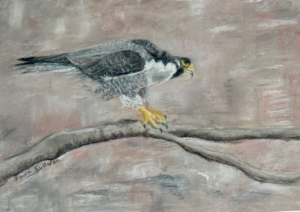
A New Painting of ‘The Beast’
A painting entitled "The Beast of State Line Lookout" now adorns the cafe there. The pastel by Laura Sullivan was…

More than 5,000 snow geese died recently from avian flu in eastern Pennsylvania.
Photo credit: Chris Neff, New Jersey Audubon
My latest column for The Record answers a pressing question: In light of all the concerns over avian flu, should you take down your bird feeders?
You can read the column here:
By Jim Wright
Special to The Record | USA TODAY NETWORK – NEW JERSEY
“With avian flu becoming so widespread, should I take down my feeders?”
I’ve been seeing that question more and more these days, in emails from readers and in Facebook posts from friends.
I am relieved to say: “In most cases, no.” But…
Because infected birds transmit the virus by saliva, nasal secretions, and poop, Chris Neff and Scott Barnes of New Jersey Audubon recommend that feeders be “cleaned often, weekly if possible. Inspect them for any mold.”
If you see sick birds, Neff and Barnes say you should notify the N.J. Department of Environmental Protection at http://bit.ly/4hFSJBh.
From what I’ve read, the most significant exception to keeping feeders up is if you live near a poultry farm. Chickens are one of the avian species most impacted by the virus by far, so there is a much higher risk of nearby wild birds coming into contact with it.
A bit of background: When most people talk about bird flu or avian flu these days, they’re referring to the highly pathogenic avian influenza (HPAI), a virus that has been causing outbreaks in poultry and dairy cows and several recent human cases in dairy and poultry workers. The virus is also sometimes referred to as H5 or H5N1.
With wild birds, the virus disproportionately affects raptors, shorebirds, and waterfowl, and New Jerseyans are understandably concerned. Most notably, an estimated 5,000 snow geese were found dead in nearby eastern Pennsylvania last month.
At the time of this writing, officials were investigating the deaths of waterfowl and gulls along the Jersey Shore and parks near Trenton. In western New Jersey, the 650-acre Merrill Creek Reservoir and adjacent wood and fields have been closed to the public for several weeks due to confirmed bird-flu cases. The bird flu is also suspected in dead wild birds found in Bergen and several other counties.
Experts suggest that if you find a dead raptor or other large bird, call your local animal control. If you dispose of it yourself, wear gloves and a mask, and use a shovel to move the carcass with a tool such as a shovel into a plastic bag then double-bag, and wash your hands immediately. . The risk to humans is low, but it does exist..
Meanwhile, the NJDEP’s 2024 annual report on the state’s peregrines noted that there were indications that the virus was impacting this endangered raptor, with unusually high turnover rates for nesting falcons.
Stay tuned.
ON A MORE-UPBEAT NOTE: At last count, The recent Great Backyard Bird Count, an international citizen-science event that ran four days in the middle of February, generated some impressive results. Birders have submitted nearly 300,000 checklists and tallied nearly 8,000 species worldwide, most of which I’ve never heard of, let alone seen. These included such exotics as Hume’s boobook, the Asian koel and the Himalayan Rubythroat.
The Bird Watcher column appears every other Thursday. Email Jim at celeryfarm@gmail.com.
September 17, 2026
September 5, 2026

August 28, 2026

August 11, 2026