
September 5, 2026
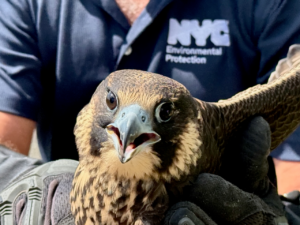
A Young Peregrine on the Ascent
Yesterday in the Mohonk Preserve near New Paltz, N.Y., Chris Nadareski of the NYC DEP released four young rehabbed peregrines,…

My new column for The Record and other USA Today newspapers in New Jersey is on the joys of birding in your backyard late in the day.
One of the little dividends of sitting outside and appreciating nature: a male ruby-throated hummingbird has been taking long sips at the nectar feeder in the evening– as recently as last night.
(A big thank you to Dee De Santis for the hummingbird photo.)
You can read the whole column here:
Jim Wright/Bird Watcher 062421/approx. 404 words
By Jim Wright Special to The Record
With the summer solstice just past and daylight extending until 9 p.m., now’s the perfect time to beat the heat and try some twilight backyard birding.
You might be surprised what you might see if you look up. Listen closely and you might be surprised by what you might hear as well.
It may be after your supper but it’s still dinner time — or breakfast time — for many birds and other critters.
Your ears will play a bigger role as you learn to pick out various bird calls, including catbirds, cardinals and (if you’re near water) red-winged blackbirds. The one downside is you’ll also become more aware of far-away traffic. I can hear cars on Route 17 a mile away on some nights.
You can sharpen your birding skills by learning to identify dusk fliers by their silhouettes and flight patterns. I typically see grackles, starlings, boisterous Canada geese, and an odd duck or two on most evenings.
Some nights I see tree swallows, which will begin their southern migration next month. Other nights I see chimney swifts – flying cigars with syncopated wing beats. They will head south in a mass departure in mid-September.
Check your feeders, too, for cardinals, which typically enjoy an evening snack.
If you see a hummingbird zipping around these days, chances are it is a male. The females are tending to their thimble-sized nests. A ruby-throated male has been raiding my nectar feeder after 8:30 p.m. this time of year.
While you’re sitting outside, keep an eye out for bats, fireflies, and clear-winged moths (their cousins, nocturnal moths, typically don’t come out until after dark.)
The one evening flier I failed to see this year is the common nighthawk, a member of the nightjar family that feeds on bugs at night. That’s cause for concern. Researchers have found that birds that depend on insects are declining faster than other birds in North America.
This leads to a suggestion. If you use one of those electronic bug-zappers, do nature a favor and put it away.
As The New York Times has reported: “Bug zappers kill bugs by the thousands. But there’s a problem: They kill the wrong bugs. They are ineffective against mosquitoes and other biting flies, and their otherwise indiscriminate killing can reduce songbird populations, disrupt pollination, and generally throw the environment out of balance.”
Finally, if your feeders are becoming a free evening buffet for white-tailed deer, you should discourage their mooching by adding a special blend of seeds that includes hot pepper. Fiery Feast is a popular brand, but there are others.
Birds are not affected by the lively mix, but it deters white-tailed deer. Why attract them to your yard, where they’ll also devour your native plants?
North Jersey is overrun with these tick magnets. It’s best not to feed them, even inadvertently.
The Bird-watcher column appears every other Thursday. Email Jim at celeryfarm@gmail.com.
September 5, 2026

August 28, 2026

August 11, 2026
July 31, 2026